SEO vs Paid Ads: Which One Brings Faster Results?
Welcome to our guide on SEO vs. Google Ads.
We’ve managed both types of strategies for Brisbane businesses across dozens of industries. We understand what works, what wastes money, and when to use each approach.
In this guide, we’ll cover:
- Which one delivers faster results: paid ads or search engine optimisation
- The key differences between SEO and Google Ads
- How to decide which strategy fits your business
- The ways you can use both strategies together
Read on to find out where your marketing budget should go.
Which One Is Faster, SEO or Google Ads?
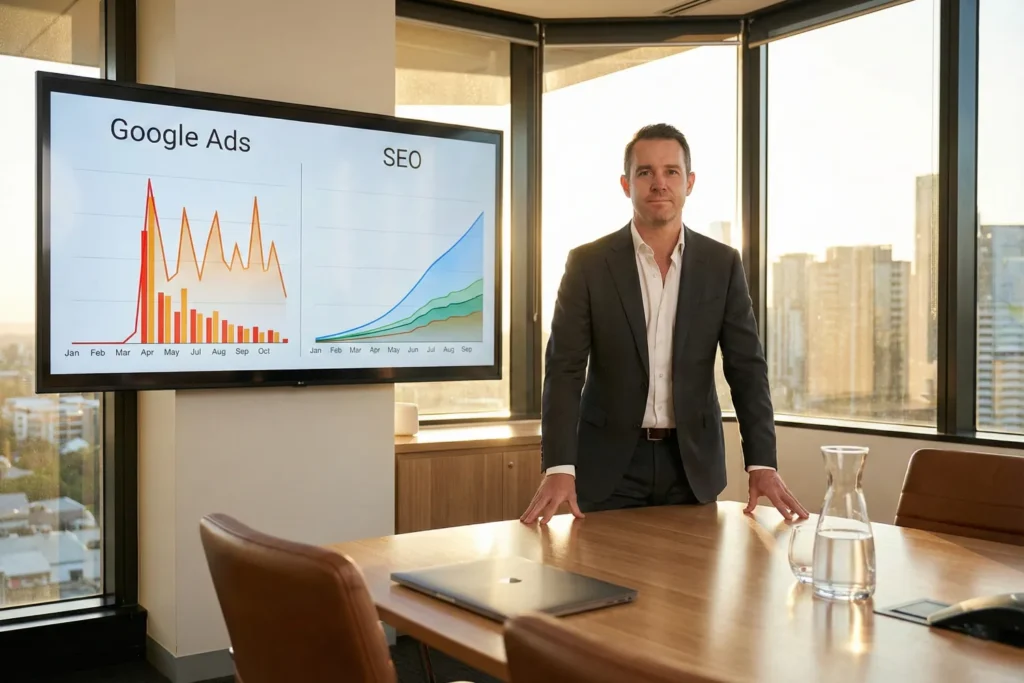
Google Ads is faster. It’s because paid ads can generate traffic within hours, while SEO takes three to six months to show results. That’s why if you need visitors today, paid ads are your answer.
But if you want traffic without paying for every click, SEO is the better long-term play.
Here’s a breakdown of these two options and how long they may take to work:
- Google Ads Timeline: Your ad copy can appear in search results the same day you launch a campaign. Since you’re paying for placement rather than earning it, it works so quickly. And how often your ads show up will depend on your budget allocation and bidding strategies.
- SEO Timeline: Three to six months is the typical wait before you see meaningful organic traffic. It feels slow, but good SEO builds momentum that builds up over time. In other words, content creation and link building simply need time to do their job.
- The Sandbox Effect: If you have new websites, they may take up to 12 months to rank properly. Google needs to trust your site before showing it to searchers (a bit like being the new kid at school). However, established sites with backlinks and existing customers skip most of this waiting period.
- When the Budget Runs Out: Every visitor from Google Ads costs money, and once you stop paying, the traffic stops too. But in terms of SEO, when your site ranks for the right keywords, it keeps bringing in visitors over time (even after the main work is done).
In the end, you’re choosing between quick traction and permanent momentum.
What Are the Key Differences Between SEO and Google Ads?

The key differences come down to how you pay, how users interact with results, and how long the benefits last. Understanding these differences helps you spend your marketing budget in the right place.
We’ll now explain these differences below.
How You Pay
The best thing about SEO is that you stop paying for every visitor once rankings are established. Once everything is set, you only pay for content creation, tools, and agency fees rather than individual clicks.
Google Ads uses a pay-per-click (PPC) model, so every visitor costs money, regardless of their purchase decision. And the cost-per-click (CPC) varies depending on your industry and keyword competition (let us tell you, it isn’t for the faint of heart).
Seriously, we’re talking from experience. One of our clients switched from ads to SEO and matched their traffic within a year, without the ongoing ad spend.
Click-Through Rates (CTR)
The top organic result pulls significantly more clicks than paid ads. That gap is hard to ignore when planning your marketing spend.
Specifically, organic search results consistently outperform paid ads in click-through rates (CTR). Many people scroll right past sponsored listings because they trust organic results more.
To sum it up, ads can be effective, but a lot of people skip them by choice. That’s how your reach will stay capped irrespective of your ad budget.
Pro tip: Use organic pages to warm users before retargeting them with ads later in the funnel.
User Trust
Ranking organically signals something to potential customers. It tells them Google trusts your website enough to recommend it. That perception is important, especially for service businesses where trust influences buying decisions.
Now, paid ads work well for plenty of businesses, but some searchers actively avoid anything labelled “sponsored”. So even with solid targeting, some clicks are never going to happen.
How Do You Decide Which Strategy Fits Your Business?

You choose your strategy based on your timeline, budget, and business goals. As we mentioned earlier, Google Ads suits immediate needs, while SEO suits lasting growth.
Consider the following factors while picking your preferred strategy:
- Immediate Visibility Needs: Google Ads is your best bet when you need lead generation results this week. For instance, product launches and seasonal sales can’t wait months for organic rankings to kick in. Ads also let you test relevant keywords before committing to a durable strategy.
- Long-Term Growth Focus: Sustainable organic growth over the years suits businesses that are playing the long game. It’s because organic traffic builds brand authority and trust with potential customers in ways ads can’t replicate. And the longer you invest in SEO, the better your marketing ROI becomes.
- Budget Constraints: When your marketing spend is tight, SEO is often the better option. Google Ads requires continuous budget allocation to keep traffic flowing. However, SEO needs upfront investment, but it reduces your customer acquisition cost over time.
- Testing Before Committing: Running ads first can give you useful data before you invest in SEO. Because of this, one of our clients used Google Ads conversion data to shape their entire content strategy. In particular, Smart Bidding revealed clear search intent signals they’d otherwise have to guess.
Once these factors are clear, you can adjust your spending to your goals.
How Do SEO and Google Ads Work Together?

SEO and Google Ads work together by using paid ads to fill the gap while organic rankings build. It also involves sharing keyword data between both channels. Most successful businesses use both strategies rather than picking one or the other. But you must know how to make them complement each other.
Let’s take a closer look at these approaches.
Bridging the SEO Waiting Period
The fastest way to stay visible while waiting for SEO results is to run Google Ads alongside your organic efforts. This way, you get traffic now while building something that lasts.
To make this strategy work, you need to run paid ads during those first three to six months when SEO hasn’t kicked in yet. Doing so will make leads come through the door while your content and backlinks do their work in the background (it’s about staying visible from the beginning).
As your organic rankings improve, you can slowly reduce ad spend. The goal here is to shift your traffic steadily instead of cutting over all at once.
Using Ad Data for Keyword Research
Google Ads reveals which relevant keywords actually drive conversions for your business. That information is priceless when you’re planning your SEO content strategy. You use this real data from your ad campaigns and produce your content.
Believe it or not, keywords that convert well in paid search are worth targeting with organic content, too. And your marketing strategy will become stronger when both channels share insights.
The ads tell you what works, and SEO helps you own those terms without paying for every click.
Pro tip: Use negative keywords from Google Ads to avoid wasting SEO effort on low-intent topics.
Your Next Steps With SEO and Google Ads
That’s it for our breakdown of SEO vs Google Ads. You now know that Google Ads delivers faster results, but SEO builds long-term value without ongoing ad spend. Put simply, both have their place depending on your timeline and budget.
If you need leads this week, start with Google Ads. But if you’re building for the future and want traffic that doesn’t disappear when the budget runs out, invest in SEO. And if you can swing it, use both together for the best results.
We’ve helped Brisbane businesses get their digital marketing strategy right since day one. Get in touch with us at Fed Thread to find out which approach suits your business goals.