Digital Marketing Basics for Small Businesses That Feel Overwhelmed
Digital marketing sounds simple enough until you try to figure out where to start. One minute you’re looking at social media posts, the next it’s email campaigns, paid ads, SEO, and content creation. Each channel promises results, and every expert insists that theirs is the one that works. Suddenly, you’re stuck deciding between ten different directions.
This kind of analysis paralysis can be worse than having no options at all. You spend weeks researching Facebook ads, only to switch to SEO, then someone mentions email marketing. Nothing gets launched because you’re still trying to pick the “right” first step.
This guide covers digital marketing basics without the overwhelm. You’ll learn:
- What each channel actually does
- How to choose the right one for your business
- How to set a realistic budget
- How to track what’s working
By the end, you’ll be ready to launch something for real.
What Is Digital Marketing? Online Channels That Replace Traditional Ads

Digital marketing is how businesses promote themselves using the internet instead of traditional media like TV or newspapers. It focuses on using platforms like websites, social media, and email to reach people who are already interested in what you offer.
For example, if you’re a Brisbane plumber, you can target homeowners in Paddington searching for emergency repairs. Traditional advertising would mean paying for a newspaper ad that reaches thousands of people who don’t need your services.
Plus, with digital marketing, you can track who sees your message, what they click, and whether they take action. That visibility lets you adjust quickly based on real data.
The 4 Digital Marketing Channels You Need to Know About
Most small businesses use websites, SEO, social media, and email marketing because the cost is lower than traditional advertising. These marketing channels handle different jobs, so the best starting point depends on your goal.
Let’s break down how each channel works.
Social Media Marketing for Direct Customer Connection
Social media platforms like Facebook and Instagram let you talk directly with potential customers every day. That means you can answer questions, share updates, and build relationships. You don’t even need to spend money for each interaction like you would with paid ads.
Every time someone benefits from your free advice or a helpful post, they remember you and are more likely to reach out when they’re ready to buy.
Content Marketing That Builds Long-Term Authority
Content marketing includes creating helpful blog posts, videos, or guides that answer your customers’ questions. When people find your valuable content through a search engine like Google, they will likely see you as the expert in your field.
This authority compounds over time. Each article you publish ranks for different search terms, which means more people discover you. For instance, someone who’s read your articles multiple times before reaching out already trusts your expertise. Compare that to a cold lead from an ad that knows nothing about you and questions everything.
Email Marketing Without Looking Like Spam
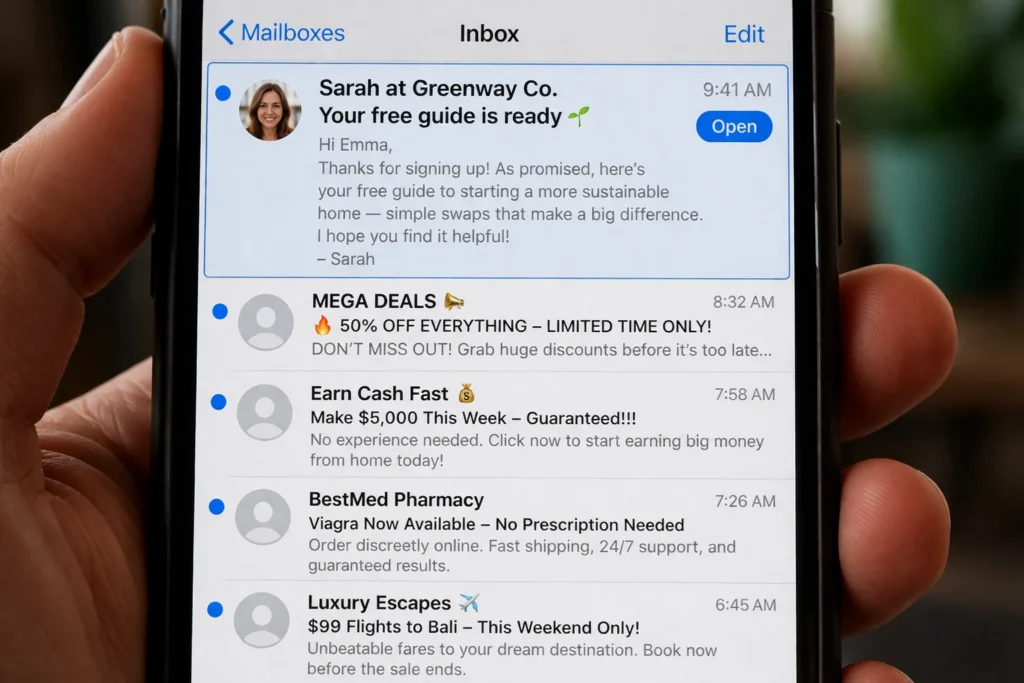
Email marketing works by sending messages to people who’ve already shown interest in your business. Because they chose to hear from you, your emails feel relevant rather than intrusive.
That’s what separates email marketing from spam. Regular emails keep your business top of mind without being pushy. And personalised campaigns make this even stronger by referencing what someone downloaded, bought, or clicked before.
Paid Ads When Speed Beats Patience
If you need customers next week rather than next year, paid advertising delivers faster than any other channel. The drawback here is the cost. Paid ads can run $500–$2,000 per month or more in competitive niches like legal or real estate.
You’ll also need a legitimate platform. Google Ads reaches people actively searching for your service right now, making it ideal for immediate results. Social media ads, by contrast, are better when you want to build awareness with people who may need your business later.
Market Research Before Tactics: Why You Need to Know Your Customer First
Picking a marketing channel before you know your customer is like opening a cafe without checking if anyone lives nearby. That’s why market research comes first. It tells you who your customers are, what they want, and where they spend time online.
Without this knowledge, you might waste money running Facebook ads when your audience is actually searching Google. Even worse, your messaging could focus on features that don’t resonate with what people actually need. For example, a Brisbane accountant advertising “30 years of experience” might miss the mark when customers really just want quick, responsive service.
Since market research reveals what your potential customers actually value, you can avoid wasted effort, choose the right marketing channels, and craft messages that truly connect.
Your Marketing Strategy Starts With These 2 Decisions
Imagine you’ve got a Facebook page, an Instagram account, and you’re posting three times a week. But six months in, nothing’s happened. No new customers, no increase in calls, just crickets.
To avoid this, your marketing strategy should start with two decisions: what you’re trying to achieve, and how much you can spend to get there.
Business Goals That Guide Your Marketing Efforts
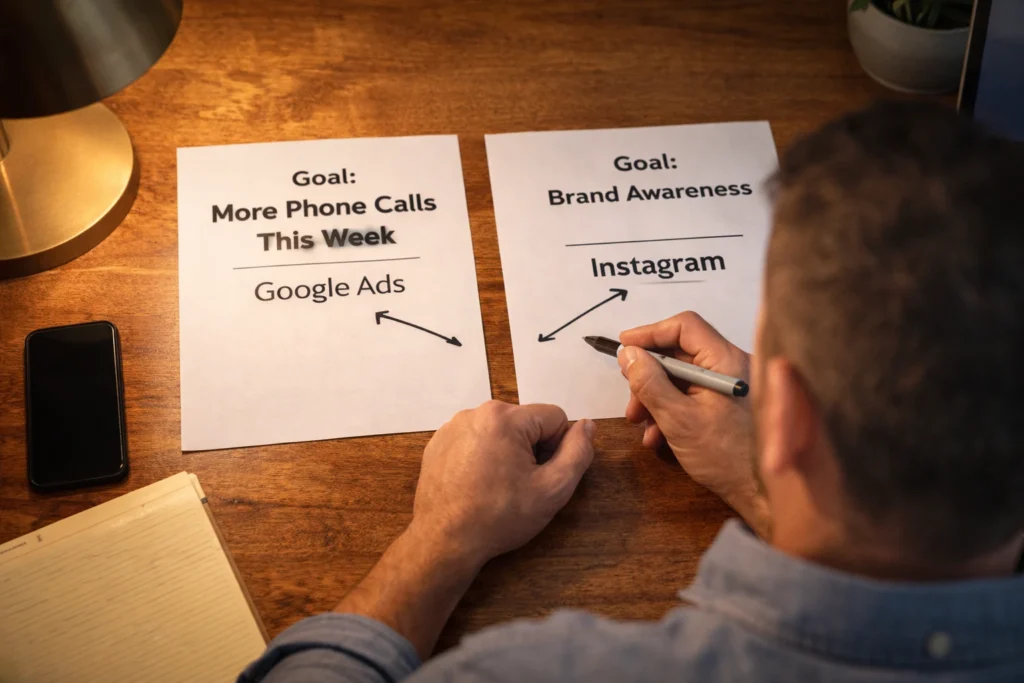
Different business goals require different approaches. For example, if your immediate goal is more phone calls, Google Ads targets people who are already looking for what you offer. Instagram works differently. It reaches people scrolling for entertainment who aren’t ready to contact anyone yet.
A mismatch costs you time and money, which is why you should match your channel to your goal, instead of just following what others are doing.
Budget Limits for Small Business Owners
Many small business owners worry they don’t have enough budget for digital marketing, but you don’t need to start big. Just investing $500–$1,000 per month is often enough to test one channel effectively, covering both ad spend and basic content creation.
But the key here is focus. Start by picking one channel and learning what works there. Spreading the same budget across Facebook, Google, and email usually results in weak results everywhere and no clear idea of what’s worth scaling.
Which Channel Fits Your Business? Retail vs Service vs Local
Your business type determines which channel works best. Here’s a quick guide:
Retail Businesses:
- Best Channels: Facebook, Instagram
- Why: Customers browse visually and make impulse purchases. Someone scrolling Instagram can see your product, like it, and click to buy within minutes.
Service Businesses:
- Best Channels: Google Ads
- Why: Customers search when they need help. For example, someone searching “divorce lawyer Brisbane” is ready to hire, not browse casually.
Local Businesses:
- Best Channels: Google Business Profile Social Media
- Why: Local searches drive foot traffic. People often search “cafe near me” or “gym Fortitude Valley,” so having a Google Business profile ensures they find you first.
Bottom line: match your channel to how people decide to buy.
Planning Digital Marketing Campaigns Without Overthinking
You don’t need expensive tools or a marketing degree to run a campaign. A digital marketing campaign is just a coordinated effort with one clear goal and a set timeframe.
Start by selecting your channel. Then create three to five pieces of content and set a two-week deadline. A two-week deadline helps you to launch and get real customer feedback quickly.
After those two weeks, review what happened. Ask yourself: Did people click? Did anyone call or buy? And use that data to decide whether to keep going or adjust your message. This simple cycle helps you improve with each campaign instead of getting stuck planning the first one.
Simple Metrics That Show If Your Marketing Efforts Are Working
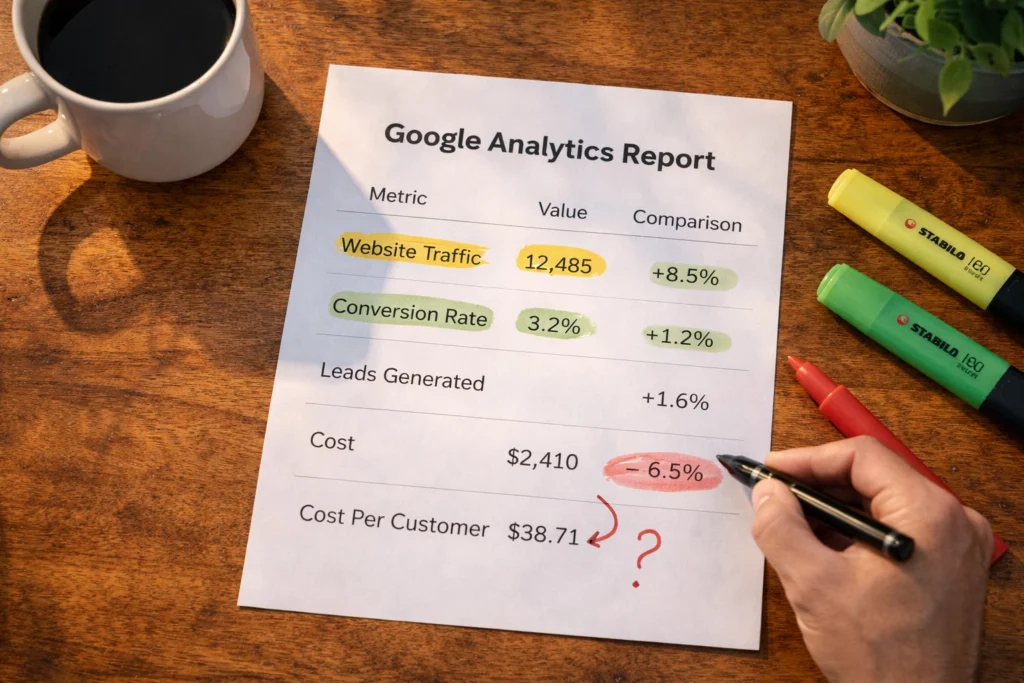
You don’t need to track dozens of marketing metrics. Just three numbers tell you if your marketing is working:
- Website Traffic: This shows how many people find your site each month. If you’re getting 10,000 visitors but zero sales, you’re either attracting the wrong audience or your offer doesn’t match what they expected when they clicked.
- Conversion Rate: When you want to know if people are actually taking action, check your conversion rate. It measures the percentage of visitors who buy, call, or sign up. A rate below 2% usually means your message isn’t clear or your offer needs work.
- Cost Per Customer: CPC calculates how much you spend to acquire each customer. For example, spending $500 per customer when your product sells for $200 puts you $300 in the red on every sale.
For the best results, track all three together. When you spot the weak point, you know exactly what to fix next.
Pick One Channel and Start There
The biggest mistake small businesses make with digital marketing isn’t picking the wrong channel. It’s trying to do everything at once and doing nothing well.
Pick one channel based on your business type and goals. Give it three months of consistent effort before judging whether it works. That means:
- Posting three times per week on social media, OR
- Publishing two blog posts per month for content marketing, OR
- Running one focused ad campaign with a clear goal
Once that channel is working, you can add another. But until then, focus on one channel rather than spreading yourself thin. And if it’s not going as well as you’d like, reach out. We’ll go over your current efforts and guide you on how to get better results.